
Recent Posts
About us
Categories
- Top Sale
- Wooden activity cube
- Wooden kitchen toy
- Wooden doll house
- Wooden push walker
- Wooden balance bike
- Wooden drawing board
- Wooden educational toy
- Wooden vehicle toys
- Wooden diy set
- Wooden puzzle
- Wooden blocks
- Wooden montessori toys
- Wooden toys
- Wooden music toy
- Wooden rocking horse
- Wooden board game
- Wooden crafts
- Kids/baby furniture (sets)
- Wooden furniture
- Kids Playground
- OWN DESIGNS
Quick Answer: Glue is one of the most overlooked parts of a wooden toy. It affects safety, durability, and compliance. Cheap or wrong adhesives can fail in heat, crack in cold, or contain harmful substances. ESATOYS — the export brand of Wenzhou Times Arts & Crafts Co., Ltd. — has produced wooden toys for EU and US buyers for 24 years. Here is what to check before you approve a supplier.
Why glue matters more than most buyers think
A wooden toy can look perfect when it leaves the factory. But if the glue fails, the toy can fall apart in a child’s hands. That creates safety risks, returns, and brand damage.
Glue also affects compliance. Adhesives can contain solvents, formaldehyde, or heavy metals. For the EU, they fall under EN71-3 and REACH. For the US, they fall under CPSIA and ASTM F963. If your supplier uses the wrong adhesive, your product can fail testing.
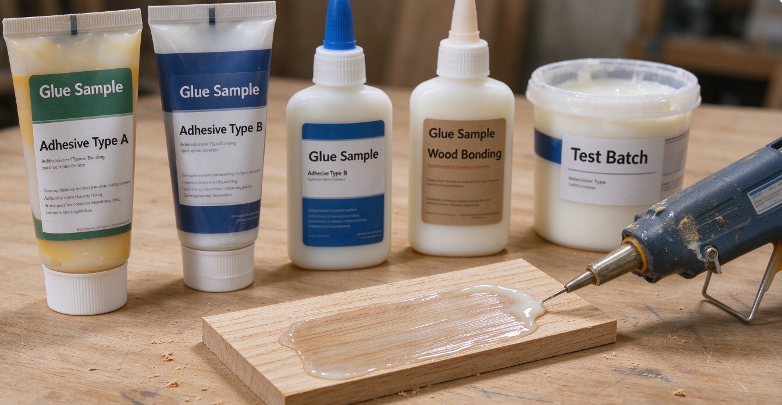
Common adhesive types for wooden toys
Water-based PVA glue: The most common choice for wood-to-wood bonding. It is low-odor, non-toxic, and child-safe when formulated correctly. It works well for general assembly.
Polyurethane glue: Strong and water-resistant. Often used for outdoor toys or products that need extra durability. Must be fully cured before packing.
Hot melt glue: Fast-setting and widely used for small parts. Good for high-volume production, but must be tested for heat resistance.
Plant-based / starch glue: Growing in popularity for eco-friendly toy lines. Offers a natural story but can be less durable in humid conditions.
What to ask your supplier
Before you approve a wooden toy order, ask:
-
What type of adhesive do you use?
-
Is it non-toxic and child-safe?
-
Can it pass EN71-3 and CPSIA testing?
-
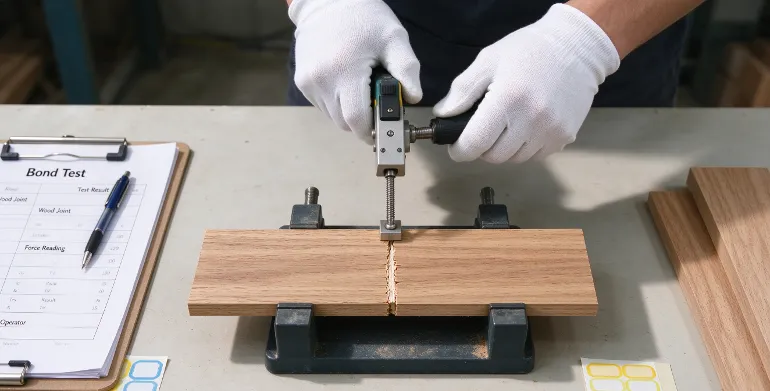
How do you check bond strength?
-
Does it hold up in heat and humidity during sea freight?
-
Can I see a sample after full curing?
A supplier who answers these clearly understands production. If they say “any glue works,” that is a warning sign.
How ESATOYS controls adhesive quality
ESATOYS is the export brand of Wenzhou Times Arts & Crafts Co., Ltd. We have 24 years of experience serving brands, importers, and retailers in Europe and North America. We use child-safe adhesives and control curing time before packing. We support EN71, ASTM F963, and CPSIA compliance where applicable. Third-party testing can be arranged before shipment. FSC-certified wood is available on request.
Common adhesive mistakes
-
Using solvent-based glue instead of water-based
-
Not allowing enough curing time before packing
-
Skipping bond strength testing
-
Changing adhesive without retesting
-
Ignoring humidity and heat during shipping
Next step: Send us your wooden toy idea, target market, and age group. We will reply with clear feedback on materials and production — usually within 24 hours on business days.
Contact ESATOYS via www.evatoys.com